
The top 10 dog accessories are collar and ID tags, leash, harness, bed, food and water bowls, toys, grooming kit, crate, poop bags, and a travel carrier.
As a longtime dog owner and professional pet writer, I have tested and researched hundreds of products to answer the question What are the top 10 dog accessories? This article gives clear, practical guidance and proven picks to help you choose accessories that boost your dog’s safety, comfort, and joy. I will explain why each item matters, how to shop for it, real-world tips from my experience, and common trade-offs to consider. Read on to build a smart, useful accessory kit for your dog.

Top 10 Dog Accessories — detailed list and why they matter
What are the top 10 dog accessories? Below are the essentials, listed with purpose, benefits, buying tips, and real-use notes from my experience.
1. Collar and ID tags
A collar with clear ID tags is the first line of safety for any dog. Collars should fit snugly but allow two fingers of space. ID tags must show your name, phone number, and city.
Benefits
- Immediate identification if your dog gets lost.
- Holds rabies or license tags visibly.
- Works with a leash for short, supervised outings.
Buying tips
- Choose nylon or leather for daily wear.
- Consider a quick-release buckle for safety.
- Use an engraved metal tag for durability.
Personal note: I once had a neighbor return my lab because the tag had my number. A readable ID tag works.
2. Leash
A good leash gives control and safety on walks. Options include standard 4–6 foot leashes, hands-free options, and long training lines.
Benefits
- Keeps your dog close in busy areas.
- Helps train impulse control and loose-leash walking.
- Hands-free leashes make jogging easier.
Buying tips
- Use 4 to 6 feet for city walks.
- Pick a sturdy clip and durable webbing.
- Reflective stitching helps night walks.
Real use: I prefer a 6-foot leash for training and a retractable for open parks only when off-leash rules apply.
3. Harness
Harnesses distribute pressure away from the neck. They reduce strain for dogs that pull and improve control for small or brachycephalic breeds.
Benefits
- Safer for pulling dogs and those with neck issues.
- Better control for puppies and reactive dogs.
- Some harnesses offer front-clip options to deter pulling.
Buying tips
- Measure chest girth for correct size.
- Check for padded straps to avoid chafing.
- Look for adjustable points for a snug fit.
Experience tip: A front-clip harness made training my rescue’s lunging habit easier.
4. Comfortable bed
A supportive bed protects joints and improves sleep quality. Beds range from flat pads to orthopedic memory foam.
Benefits
- Prevents pressure sores in older dogs.
- Keeps dog off cold floors.
- Creates a safe, cozy spot.
Buying tips
- Match bed size to dog length plus space to curl.
- Choose washable covers for hygiene.
- For older dogs, choose memory foam.
Personal insight: A supportive bed cut down my dog’s morning stiffness after a few weeks.
5. Food and water bowls
Sturdy bowls encourage healthy eating and reduce mess. Options include stainless steel, ceramic, and no-spill designs.
Benefits
- Easy to clean and durable.
- Elevated bowls help large breeds with posture.
- No-tip or weighted bowls reduce spills.
Buying tips
- Use stainless steel for hygiene and durability.
- Choose non-slip bases for active eaters.
- Consider slow-feed bowls for fast eaters.
Practical note: A slow-feed bowl prevented bloat-like gulping in a young, fast-eating pup I once fostered.
6. Interactive and durable toys
Toys provide exercise, enrichment, and dental benefits. Offer chew toys, puzzle toys, and fetch toys to meet different needs.
Benefits
- Reduces boredom and destructive behavior.
- Strengthens teeth and gums with safe chews.
- Mental stimulation through puzzles reduces stress.
Buying tips
- Match toy toughness to chewing strength.
- Rotate toys to keep interest high.
- Supervise new toys for safety.
Experience: Puzzle toys kept my anxious dog calm during storms more reliably than treats alone.
7. Grooming kit
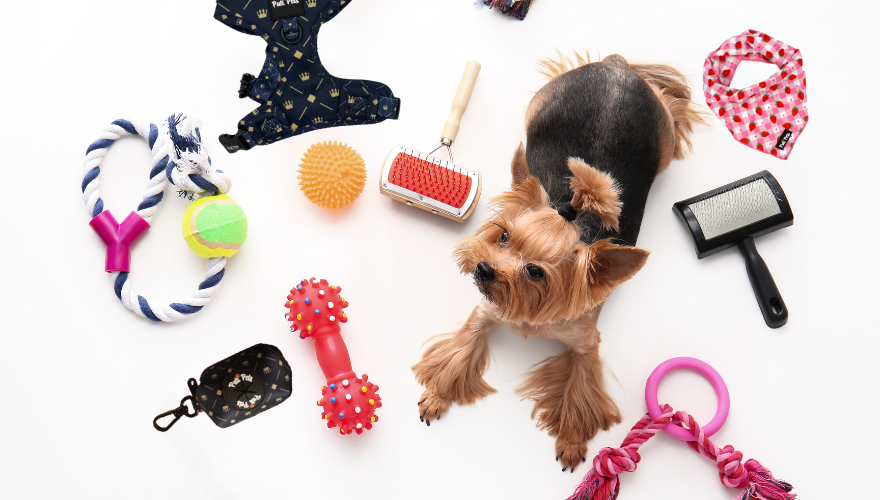
A basic grooming kit includes a brush, nail clippers, ear cleaner, and dog-safe shampoo. Regular grooming supports skin and coat health.
Benefits
- Prevents matting and skin infections.
- Helps spot lumps or parasites early.
- Keeps nails at healthy length.
Buying tips
- Use slicker brushes for long coats and bristle brushes for short coats.
- Trim nails every few weeks or as needed.
- Use ear cleaner sparingly and follow vet advice.
Field tip: Regular brushing reduced my dog’s shedding by controlling loose hair before it spread.
8. Crate
A crate provides a safe den for travel, rest, and behavior training. Crates should be large enough to allow standing and turning.
Benefits
- A secure place during storms or travel.
- A useful tool for house training puppies.
- Limits access when unsupervised.
Buying tips
- Use crates for short periods and avoid full-time confinement.
- Add soft bedding and water for longer stays.
- Choose collapsible crates for travel.
Personal caution: Over-crating can harm a dog’s mental health. Use it as a tool, not a prison.
9. Poop bags and waste tools
Cleaning up after your dog keeps public spaces clean and avoids fines. Use biodegradable bags and a small scoop for easy handling.
Benefits
- Maintains community hygiene.
- Prevents parasite spread.
- Reduces environmental impact with biodegradable options.
Buying tips
- Keep several spare bags on every walk.
- Buy scent-free bags if you or your dog are sensitive.
- Carry a small dispenser for convenience.
Practical habit: I always carry at least three bags. It avoids embarrassing moments when a bag runs out.
10. Travel carrier or car safety gear
A travel carrier or dog seat belt keeps dogs safe in vehicles. Properly securing a dog reduces injuries during sudden stops.
Benefits
- Protects dog and passengers.
- Reduces driver distraction.
- Complies with many local safety recommendations.
Buying tips
- Use crash-tested harnesses or secure carriers.
- Anchor carriers to the vehicle seat for stability.
- Never leave a dog unattended in a hot car.
Personal note: A crash-tested harness gave me peace of mind on highway trips with my dog.
What are the top 10 dog accessories? They form a simple, practical toolkit for safety and care. Each item has clear benefits and real-world uses. Choose items based on your dog’s age, size, breed, and behavior.
Source: eventusrecruitmentgroup.com
How to choose the right accessory for your dog
Selecting the right accessory depends on health, lifestyle, and budget. Ask these simple questions before buying: Is my dog small or large? Does my dog pull or is it calm? Is the product tested for safety?
Key steps
- Assess your dog’s needs: age, breed, behavior.
- Prioritize safety-first items: collar, ID, leash.
- Read reviews and check veterinary recommendations.
- Measure your dog carefully for fit.
Common concerns answered in brief form: For allergy-prone dogs, choose stainless steel bowls and hypoallergenic bedding. For chewers, pick high-durability toys and escape-proof crates.
Personal advice: Start with a few high-quality items. Replace low-quality gear that fails quickly. Investing in quality saves money and stress.
Source: com.au
Safety, care, and maintenance for accessories
Keeping accessories clean and safe extends their life and protects your dog. Follow simple care steps.
Maintenance tips
- Wash bowls and bedding weekly.
- Check collars and leashes for wear and replace when frayed.
- Clean toys and inspect for loose parts.
- Sanitize crates and carriers after travel or illness.
Safety notes
- Avoid choke chains for unsupervised use.
- Never leave small chew toys with puppies who swallow pieces.
- Keep grooming tools sharp and clean to avoid injury.
Veterinary guidance: Regular checks with your vet help spot issues related to accessories, such as skin irritation from collars or ear problems from dirty bedding.

Source: webzen.fr
Personal experience and lessons learned
I have owned breeds from small terriers to large retrievers. Here are real lessons from that experience.
Lessons
- Invest in fit and comfort over flashy features.
- Replace collars and leashes after 6–12 months if used daily.
- Test toys in short sessions first to judge durability.
- Choose multifunctional items, like washable beds that also travel well.
Mistakes to avoid
- Buying cheap collars that break.
- Leaving interactive toys unsupervised with aggressive chewers.
- Relying on a single accessory for containment or training.
These practical tips come from real use and industry best practices.
Source: trufandpeans.com
Frequently Asked Questions of What are the top 10 dog accessories?
What are the top 10 dog accessories every owner needs?
Every owner should have a collar with ID, a leash, a harness, a comfortable bed, food and water bowls, toys, a grooming kit, a crate, poop bags, and travel safety gear.
How do I choose the right size collar or harness?
Measure your dog’s neck and chest girth. Allow two fingers of space for collars and ensure harness straps are snug but not tight.
Are expensive accessories always better for dogs?
Not always. Quality matters for safety and durability, but price alone does not guarantee the right fit or function for your dog.
How often should I replace dog toys and gear?
Inspect gear monthly. Replace toys that break or shed pieces, and replace collars or leashes when frayed or damaged.
Can one accessory suit all breeds and sizes?
No. Breed, age, size, and behavior affect the best choice. Tailor accessories to your dog’s specific needs.
Is a crate humane for dogs?
Yes when used responsibly. Crates are humane if used for short periods, for training, and as a safe den—not for long-term confinement.
Conclusion
What are the top 10 dog accessories? They are practical items that protect, train, and comfort your dog: collar and ID, leash, harness, bed, bowls, toys, grooming kit, crate, poop bags, and travel safety gear. Use the buying tips here to choose items that fit your dog’s size and needs. Start with safety and fit, invest in quality for frequently used items, and maintain gear regularly for health and longevity.
Take action today: review your dog’s current accessories, replace any worn or unsafe items, and prioritize the three most needed upgrades. Share your experience or ask questions below to help others learn from your choices.